
Being Self-employed: The truth about being a Tattoo Artist
Dec 04, 2025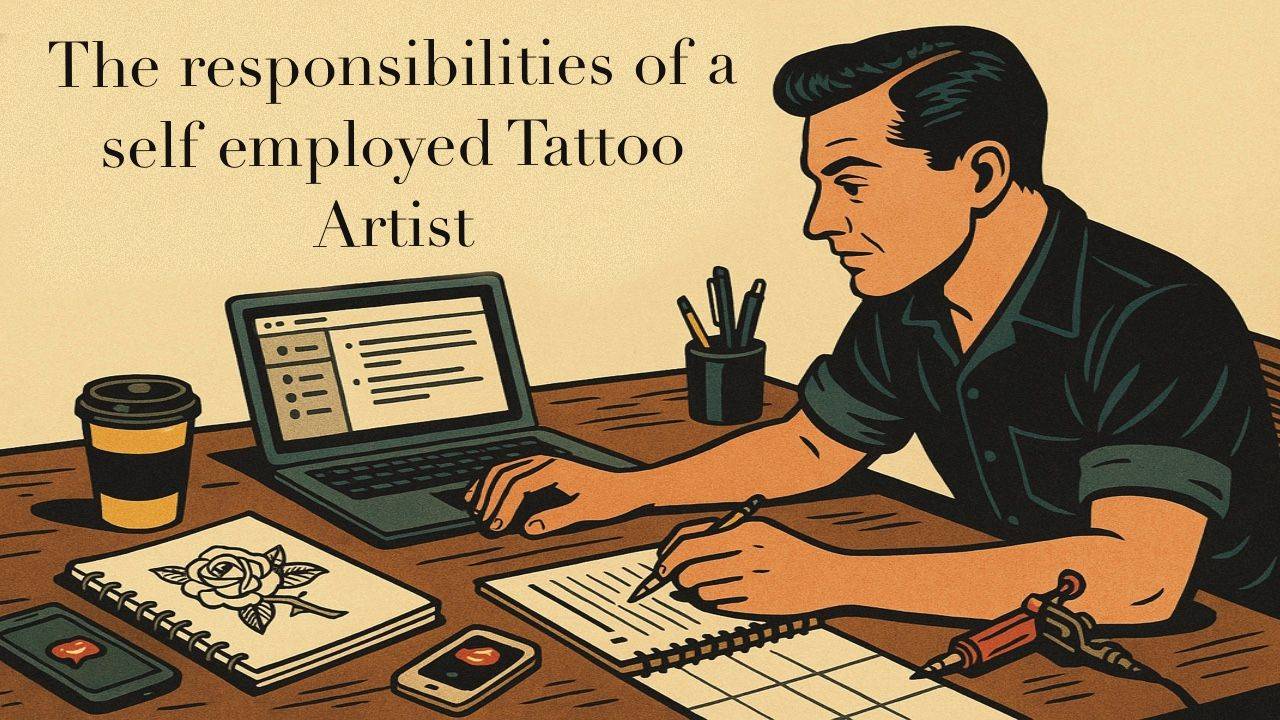
The Truth About Being a Tattoo Artist:
What You’re Really Signing Up For
Chris Toms - Tattooer Entrepenure
Most people think becoming a tattoo artist is simple:
draw → tattoo → get paid.
But anyone working in this industry — or wanting to get into it — needs to understand something that rarely gets said out loud:
Tattooing is a self-employment career.
Not a job. Not a position. A business.
Even if you’re currently in a commission shop, your long-term future still leads down one of two paths:
- Booth rent (true independence)
- Opening your own shop
Those are the only two routes that give you control, stability, and long-term earning potential.
But most tattooers never get taught the responsibilities that come with being self-employed — and that’s exactly why so many artists get stuck, burn out, slow down, or fail the jump to booth rent entirely.
This article is here to break it all down clearly:
what being a real tattoo artist actually includes and the responsibilities that belong to YOU, not the shop.
⸻
Why This Matters: Most Tattooers Are Building the Shop’s Business — Not Their Own
This is one of the biggest hidden problems in the tattoo industry.
A lot of artists spend years helping build the shop’s:
- brand
- reputation
- online presence
- phone traffic
- Google ranking
- reviews
- foot traffic
…but barely build anything for themselves.
And I’ve seen this happen more times than I can count:
- An artist works at a shop for years
- Gets busy under the shop’s name
- Relies on the shop’s reputation and momentum
- Believes the clients are “theirs”
- Leaves the shop…
- And suddenly their books collapse
Not because their skills dropped.
Not because they did anything wrong.
But because the business they thought they built was actually the shop’s business — not their own.
Clients remember the shop.
Clients save the shop’s address in their GPS.
Clients follow the shop’s Google page.
Clients find the shop when they search for tattoos on maps.
“But I have followers. People follow me.”
Some do — but here’s a hard truth:
Clients may follow your social media, but most still view you as an employee of the shop you work in.
And why wouldn’t they?
If all of your behavior reinforces that image:
tagging the shop
- telling clients to call the shop
- using the shop’s booking system
- geotagging the shop
- pushing everything through the shop’s page
- handling communication through the shop
Then you’re presenting yourself as an employee.
And when you act like an employee, clients will treat you like one.
So when you leave?
A lot of your “business” stays right where it was — at the shop.
⸻
Why So Many Artists Fail When They Move to Booth Rent
Booth rent is supposed to be the upgrade:
- more freedom
- more income
- more control
- no percentages
- no shop politics
But most artists who switch to booth rent end up overwhelmed and running back to commission.
Why?
Because the shop was carrying their business for them.
When you go booth rent, every skill you didn’t build suddenly matters:
- You don’t know how to market yourself
- You don’t know how to create demand
- You don’t know how to manage your clients
- You don’t know your numbers
- You’ve never built a brand
- You’ve never built a system
- You’ve never been responsible for your own schedule
Booth rent doesn’t make your career harder —
it simply reveals that you never learned how to run your business.
⸻
What Being a Tattoo Artist REALLY Includes
Let’s break down the responsibilities that come with choosing tattooing as a self-employment career — responsibilities that are yours whether you’re in a shop, renting a booth, or running your own private studio.
These do not disappear because you’re in a commission shop.
They are part of the career itself.
⸻
- Marketing Yourself — Not Just the Shop
This is the biggest responsibility tattooers overlook.
Some shop owners do real marketing for their artists — but that’s rare.
Most artists are realizing that the majority of the marketing is on them, and when they don’t do it, their careers begin to decline.
Your marketing responsibilities include:
- posting consistently
- showing your artwork clearly
- building a recognizable brand
- using Google Business Profile
- maintaining a website or booking page
- running or understanding ads
- showing your personality and professionalism
- educating potential clients
- following up with warm leads
If you don’t do these things, you become invisible in a market where visibility is everything.
⸻
- Managing Your Clients Professionally
This includes:
- how you communicate
- how quickly you respond
- how you take deposits
- your cancellation system
- your booking process
- delivering aftercare instructions
- collecting reviews
- keeping a real client list
- retaining clients long-term
These are not optional.
They’re core parts of running a career that repeats customers, gets referrals, and stays stable.
⸻
- Drawing, Prep, and Workflow Management
Tattooing isn’t just tattooing.
You’re responsible for:
- design work
- redraws
- messaging
- cleaning
- ordering supplies
- setting up and breaking down
- staying organized
- managing your daily workflow
These are hours of unpaid time that directly affect your income and stability.
⸻
- Understanding Your Numbers
A professional tattooer must know:
- how much they truly make
- how much they actually spend
- what their profit margin is
- how much they need to charge
- what their slow months are
- how much taxes take from their income
- how much they must save
- how to project their income
Most artists who feel “stuck” simply don’t know their numbers.
⸻
- Basic Legal, Financial, and Tax Responsibilities
Even at the simplest level, being a tattoo artist includes:
- paying your taxes (no one is withholding them for you)
- keeping receipts and records
- maintaining your license
- keeping waivers and client records safe and organized
- carrying liability coverage
- staying compliant with your state and county rules
You are responsible for every one of these — not the shop.
If you ignore them, it catches up to you.
⸻
The Reality: Ignoring These Responsibilities Leads to Decline — Fast
Look around the industry right now.
You’re seeing:
- artists slowing down
- clients being more selective
- more competition
- more saturation
- less walk-in culture
- fewer guaranteed bookings
- more artists struggling financially
The tattooers who treat their career like a real business are still busy.
The ones who rely on the shop to “do everything” are the ones falling behind.
⸻
The Real End Goal of Tattooing: Independence
The natural progression of a tattoo career is:
- Commission shop — learning, experience, portfolio building
- Booth rent — independence and true earning potential
- Private studio or shop ownership — full control and long-term stability
Each step requires more responsibility — not less.
If you don’t build YOUR business, you’ll always be dependent on the shop’s business.
And that means:
- You’re replaceable
- You’re vulnerable
- You’re capped
- You’re stuck
The only way to create stability, freedom, and longevity in this career is to embrace the fact that:
Being a tattoo artist means being a self-employed professional.
⸻
Final Message
A lot of artists think the “business side” of tattooing is optional.
It’s not.
It’s part of the job — just like drawing, tattooing, and cleaning your station.
Your future success depends on how seriously you take:
- your marketing
- your client management
- your reputation
- your communication
- your finances
- your online presence
- your systems
- your professionalism
Once you understand and embrace this, you stop being dependent on shops…
…and you start building a real career with control, stability, and the ability to grow on your terms.